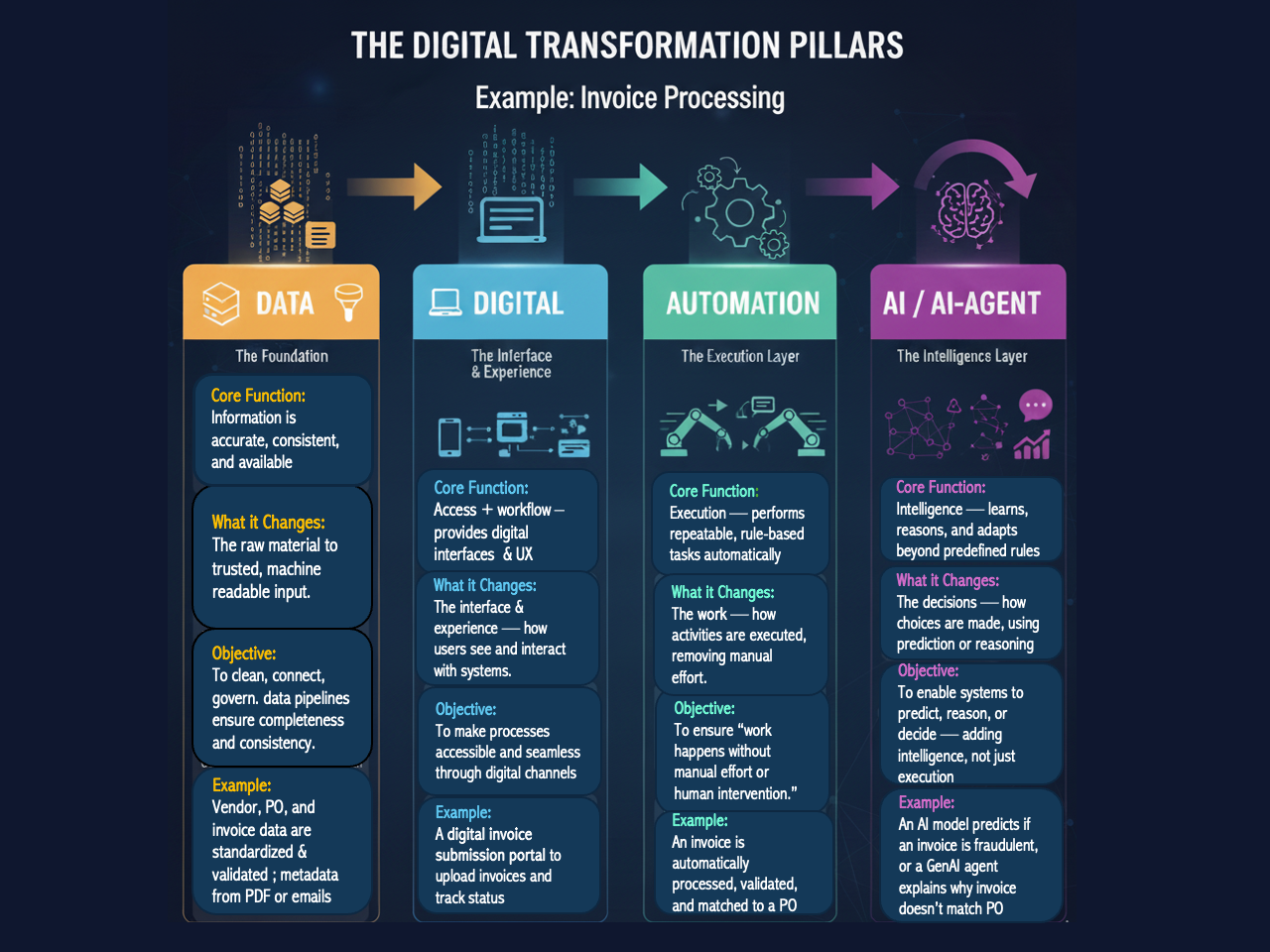
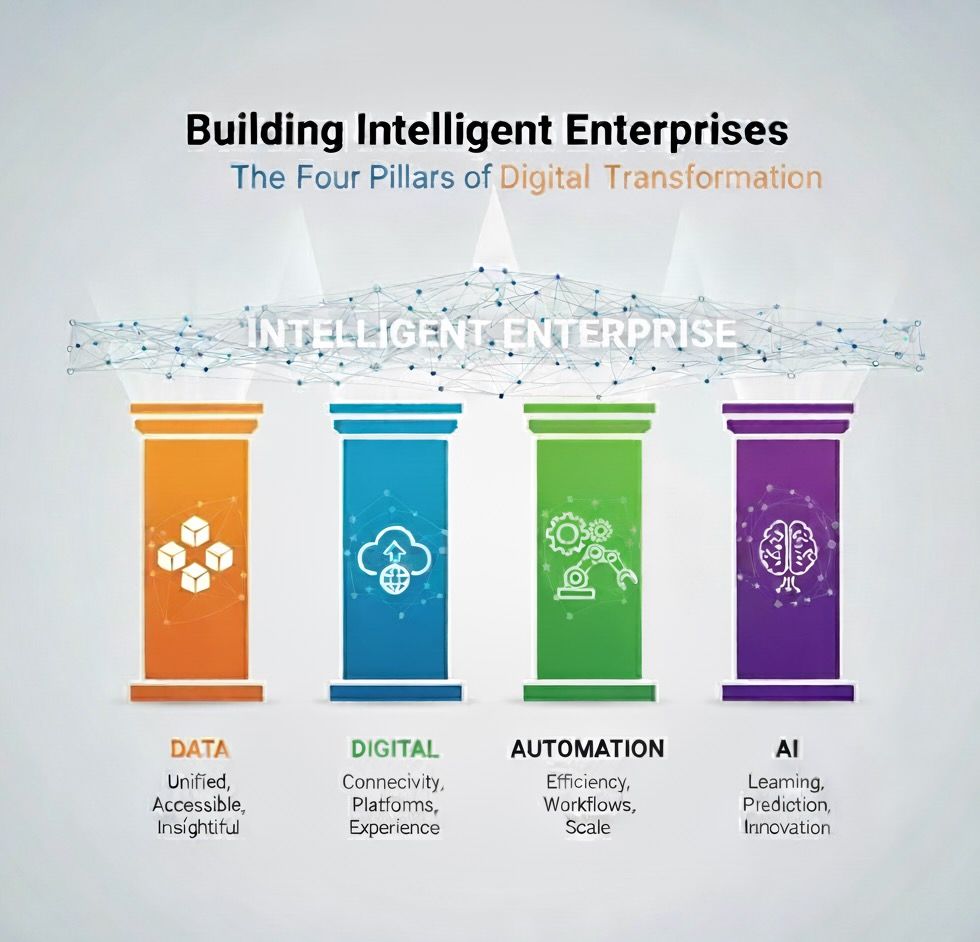
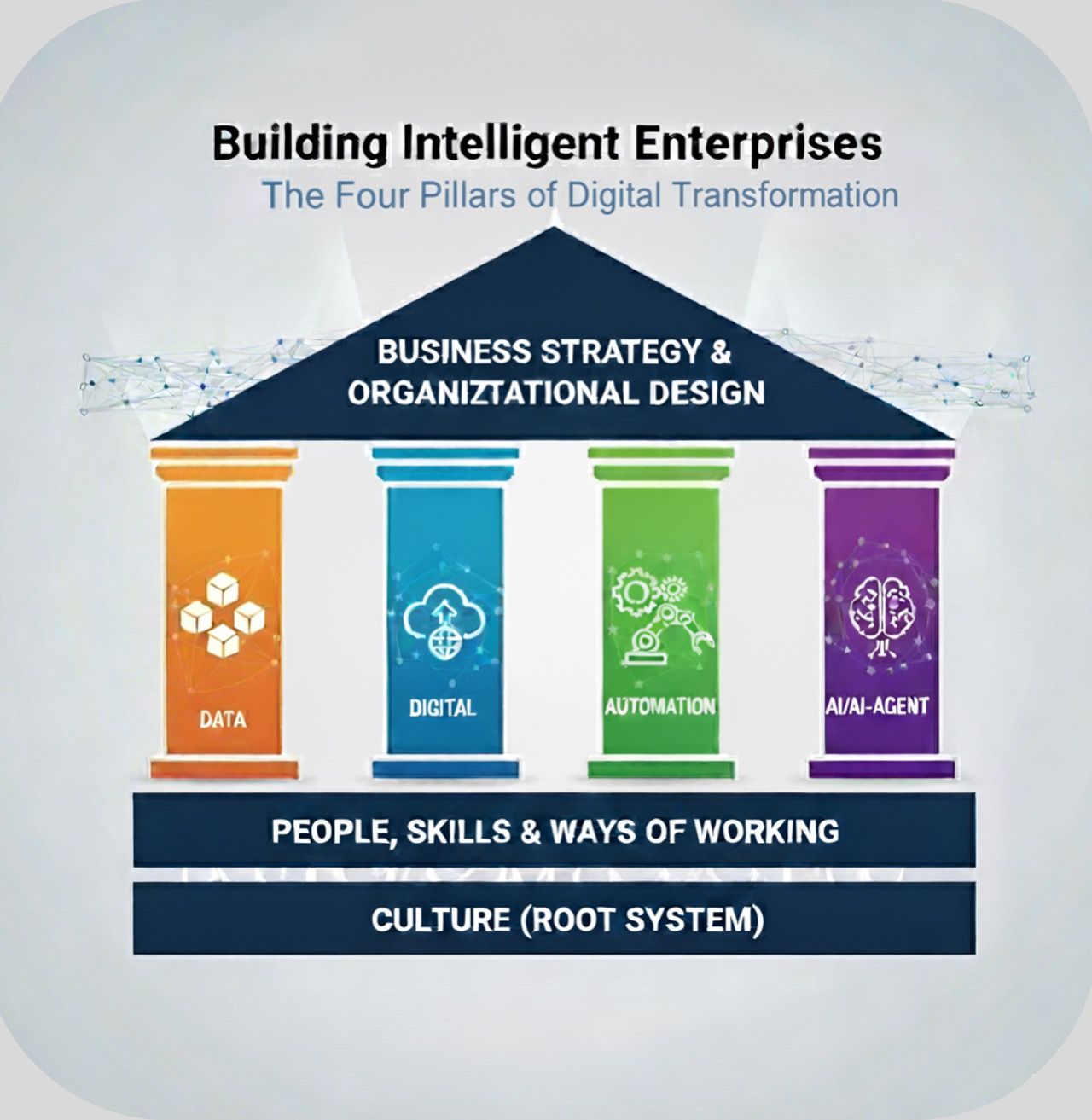
Building Intelligent Enterprises: The Four Pillars of Digital Transformation.
Digital transformation has been a central topic for over a decade, yet many organizations remain trapped in a familiar cycle: isolated pilots, fragmented initiatives, and promising ideas that never scale. The uncomfortable truth is this: modern enterprises don’t fail because of technology itself, they fail because their strategies are disconnected.
While leading research from MIT Sloan, McKinsey, Gartner, and the GenAI Divide emphasizes the importance of organizational alignment, leadership, talent, and culture, these studies largely overlook a critical technological integration gap. The real challenge for modern enterprises is not just people and culture, it is the absence of a cohesive framework that unifies: Digital Strategy, Data Strategy, Automation Strategy, and AI Strategy.
For example, research shows that
- AI and automation are often treated as separate initiatives rather than interwoven capabilities (MDPI, 2024),
- even the connection between data and AI remains under-engineered in many organizations (MIT Sloan Management Review, 2025).
- Furthermore, recent studies highlight that while firms invest heavily in Data integration and AI (Matillion Research, 2025; PwC, 2025), they typically focus on only two pillars at a time, leaving Digital platforms and Automation workflows disconnected.
The rapid rise of generative AI, including large-language models (LLMs) like ChatGPT, has further amplified this challenge. Organizations are eager to experiment with AI-driven solutions, yet without integration into broader data, automation, and digital strategies, these initiatives risk becoming another set of isolated pilots.
“Technology unlocks capability, but culture determines whether capability becomes value.”
The four-pillar model presented here fills this technological gap by offering a strategic blueprint that seamlessly integrates Data, Digital, Automation, and AI. While people and culture provide an essential foundation, the primary focus of this blog is on bridging the technology integration gap itself. By applying this framework, leaders can create roadmaps that move beyond isolated projects and enable scalable, coherent transformation
1. Data Strategy: The Foundation Every Other Pillar Stands On
“What makes data the critical backbone of digital, automation, and AI initiatives, why do so many organizations struggle to get it right, what is data strategy & why it matters ?”
Data is the raw material for insights and decision-making. Many organizations struggle because their data is siloed, inconsistent, or poorly governed – “A data strategy defines how you collect, store, integrate, secure, and govern data so it can be used reliably across analytics, automation, and AI”.
Why it matters. “Generative AI and predictive models amplify both the value and the damage of data”. Garbage in → Garbage out or Poor input → brittle models → bad decisions at scale. Recent industry analysis shows that generative AI has accelerated investment in data quality, companies recognize great AI needs great data (Harvard Business Review 2025)
“Data is no longer a by-product of operations. It is the operation”.
Gartner predicts that 60% of AI projects will be abandoned by 2026 due to insufficient "AI-ready" data and poor governance, emphasising that poor data quality is the #1 blocker for scaling generative AI and predictive systems ( Gartner 2025).
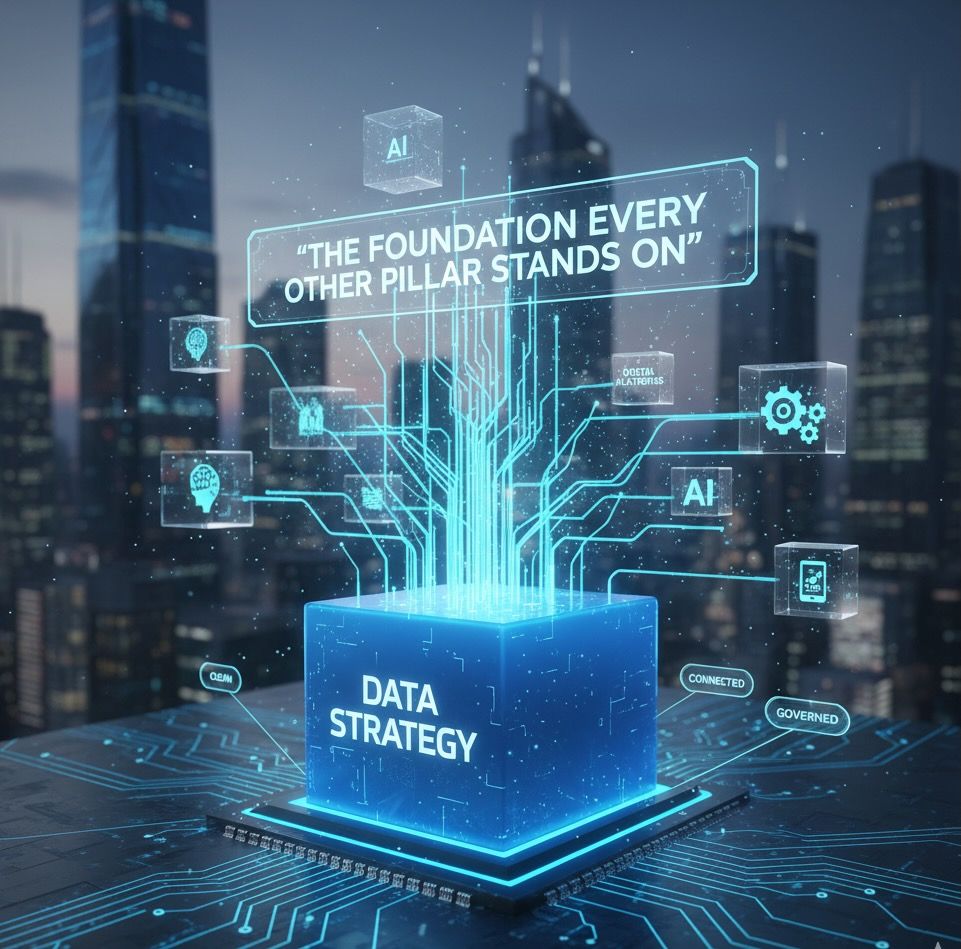
Addressing the data pillar first ensures that technological investments in Digital, Automation, and AI are fully leveraged, avoiding wasted effort and siloed projects.
If AI is the mind, data is the oxygen.
“Is your data ready to support AI, automation, and digital platforms or is it still holding your strategic initiatives back?” (Hint: A robust data strategy ensures information is clean, connected, and governed so every pillar can deliver real value.)
The upcoming Data Strategy blog will explore practical steps to unify, govern, and optimize your data, creating the backbone for the next pillar: Digital Strategy.
2. Digital Strategy: Reinventing Experiences
Digital strategy defines WHERE and WHY technology delivers value. It provides the direction, identifying where digital can create the most value and why those areas matter
Digital strategy is about more than just adopting new technologies—it’s about reimagining how organizations operate and engage with customers. From mobile applications and digital platforms to omnichannel experiences, the digital pillar ensures that businesses are accessible, agile, and responsive. Apps and portals are not ends, they’re instruments that collect data and enable automation and AI.
It includes:
- Customer-Centric Design: Building seamless and intuitive digital experiences across touchpoints - the “front door” to your digital business.
- Cloud Adoption: Leveraging the scalability and flexibility of cloud computing to accelerate innovation.
- Agility: Embracing agile practices for faster product development and market responsiveness.

Recent studies (e.g., McKinsey 2024; Sustainability 2024, MDPI 2025) consistently show that high‑performing digital enterprises build platforms, products and channels that both feed and consume data in continuous loops, forming true digital ecosystems.
“Digital without data is just interfaces. Digital with data becomes intelligence”.
With Data Strategy as the foundation and Digital Strategy defining where digital creates value, the next pillar — Automation Strategy — focuses on efficiency, consistency, and scaling operations. That’s where we go next.
Do your digital products only “serve users,” or do they also “learn from users”?
One drives efficiency. The other drives competitive advantage.
3. Automation Strategy: Driving Efficiency and Scale That Redesigns Work
Automation is transforming the way organizations function by reducing manual intervention, optimizing processes, and minimizing errors. It’s where you get fast, tangible ROI by removing repetitive labor. From robotic process automation (RPA) to intelligent workflows, automation frees up human potential for higher-value tasks and drives operational excellence.
It includes:
- Process Optimization: Identifying repetitive, rule-based tasks suitable for automation.
- Cost Reduction: Lowering operational costs by automating routine processes.
- Scalability: Enabling businesses to scale operations rapidly without proportional increases in resources.
Automation can start without a perfect data foundation, RPA and workflow tools deliver immediate savings. But to scale and handle exceptions reliably, automation needs integration with data and AI. By 2026, roughly 30% of enterprises are projected to automate more than half of their network activities, underscoring that automation must become a core capability in any forward-looking infrastructure strategy (Gartner 2024).
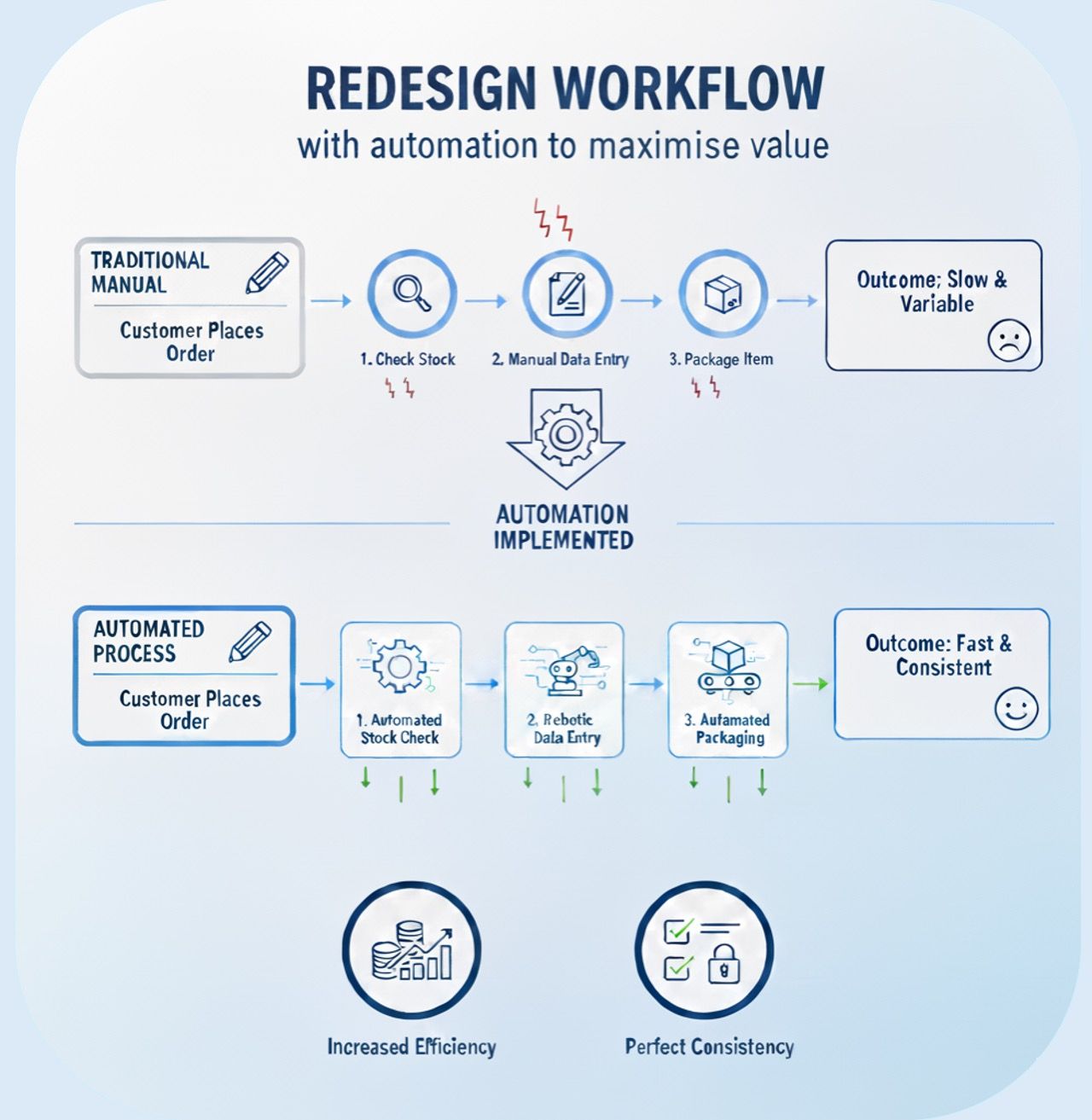
Further research points out that organizations which treat automation as a strategic priority (versus purely a cost‑cutting tool) are more likely to succeed (McKinsey & Company 2025)
What manual process, taking >1 hour per case, would deliver the biggest ROI if automated for 80% of cases?
Automation is not just about replacing manual tasks. It is where enterprises see the fastest and most predictable ROI. It’s about redefining or redesigning the work humans are meant to do.
But here’s the turning point:
Automation becomes exponentially more powerful when paired with AI.
This is the bridge to the next pillar.
Which process in your organization causes daily frustration, but repeats the same steps every time?
That’s your lowest-risk, highest-return automation target but think of redesigning the workflow instead of just digitizing it. We will deep-dive in it the blog focusing on Automation strategy.
4. AI Strategy: Unlocking New Possibilities
Artificial Intelligence (AI) represents the cutting edge of transformation, enabling organizations to go beyond automation and enter the realm of intelligent decision-making. Machine learning, natural language processing, and predictive analytics are helping businesses anticipate trends, personalize experiences, and solve problems previously thought insurmountable.
It can help businesses in many ways such as:
- Personalization: Delivering tailored experiences and recommendations to customers at scale.
- Predictive Insights: Anticipating market shifts and customer needs through AI-powered analytics.
- Innovation: Creating new products and services driven by AI capabilities.
Is AI new? Not really, Data scientists have already been using AI for decades.
However, with the rise of ChatGPT, awareness of AI has become mainstream, and organisations clearly see its potential. Generative AI tools (Copilot-type assistants) have shown real productivity gains in tasks like coding, controlled experiments show developers complete tasks significantly faster with Copilot. But these gains come with governance questions and the need for careful user experience design. arXiv+1
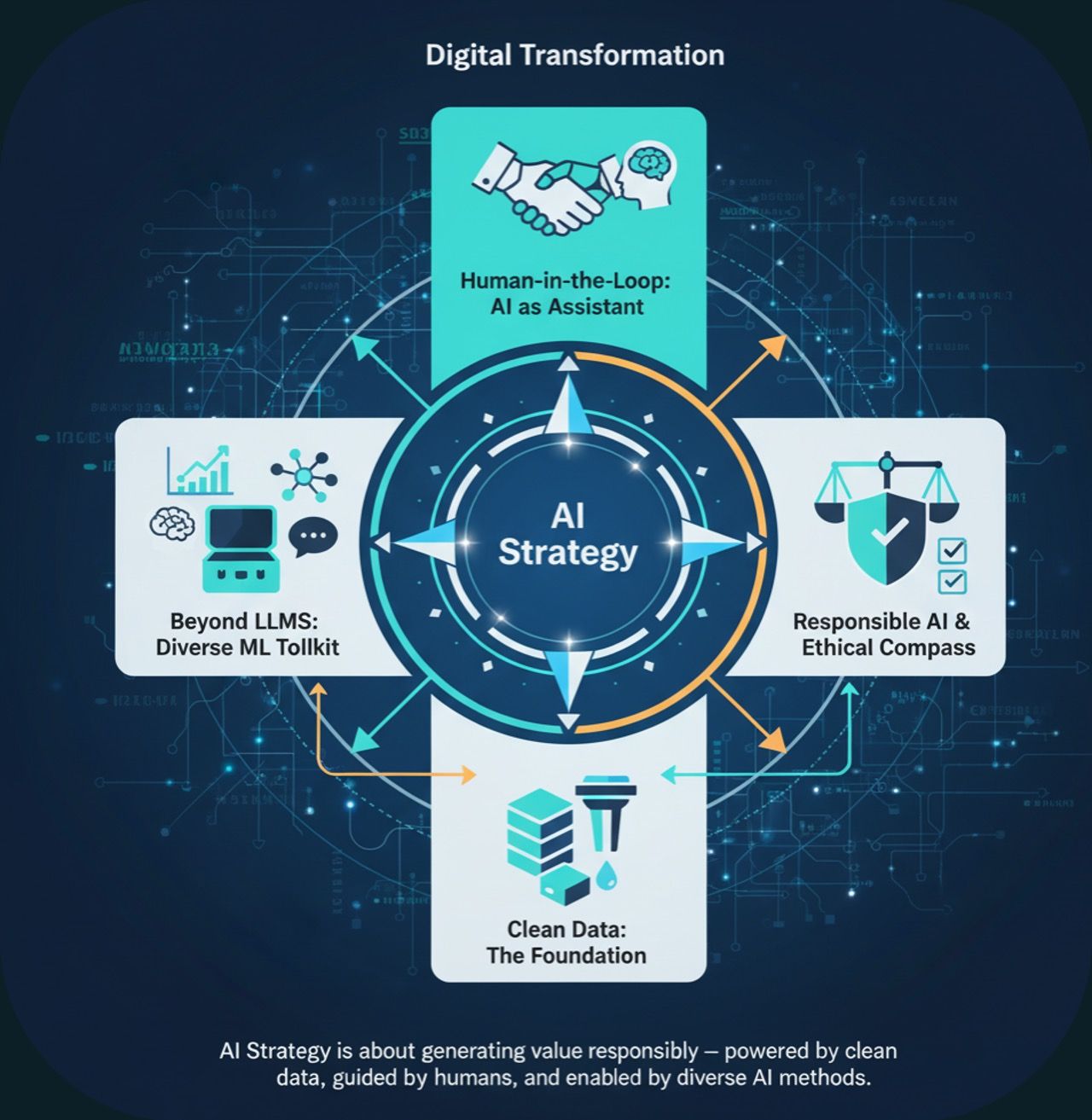
An effective AI strategy ensures responsible, ethical, and effective adoption across the organization and focuses on:
- Prioritizing AI use cases with clear ROI and measurable outcomes
- Creating an ML lifecycle with monitoring for drift, fairness checks, and retraining triggers.
- Pairing AI with human-in-the-loop processes for high-risk decisions
It’s not about defaulting to LLMs, which can be costly but about choosing the right AI/ML method to maximise value.
“Convergence – AI Agents, the next frontier” --> What they are. AI Agents are systems that perceive (collect signals), plan (reason about options), and act (execute across systems). They blend AI’s thinking with automation’s doing. They are AI systems that can take actions on your behalf, not just answer questions, but actually do tasks using tools, apps, or workflows.
Let me ask you: Do your teams view AI as a partner, a tool, or a threat?
How they answer will determine the pace and success of your AI initiatives.
How People & Culture Fit Into the Intelligent Enterprise Model
Think of the four technological pillars as the engine block.
People and culture are the operating system that makes that engine run safely, intelligently, and repeatedly.
Before data strategy, before digital strategy : there is culture.
If your culture resists transparency, experimentation, or empowerment, then:
- data will never be shared,
- digital products will not be adopted,
- automation will be bypassed,
- AI models will be distrusted or blocked.
Culture is not the fifth pillar; it is the soil in which the pillars stand.
Research from MIT Sloan, Harvard Business Review, and McKinsey repeatedly finds that the #1 predictor of digital transformation success is not tech readiness, it’s cultural adaptability and cross-functional collaboration (HBR 2024; MIT Sloan 2023)
Conclusion: Building a Holistic Transformation Strategy
While each pillar: Data, Digital, Automation, and AI, can drive significant change independently, their true power lies in integration. Organizations that harness these pillars in unison are better equipped to adapt to disruption, foster innovation, and deliver exceptional value. The journey of transformation is ongoing, but with a strong foundation in these four areas, businesses can confidently shape their future in the digital age.